
Free Sleep Apnea Quiz · About 3 Minutes
Snoring, waking up tired, or told you stop breathing at night?
Take our quick quiz to see whether your symptoms may point to sleep apnea, then find out what to do next.
- Based on validated screening tools
- Results right away
- Clear next steps
This quiz is a screening tool, not a diagnosis. Only a physician can diagnose sleep apnea.
Your Next Step
Whatever your results, if you have symptoms of sleep apnea, don’t wait to get answers. Sleep apnea is common, and it’s treatable.
What Untreated Sleep Apnea Can Mean for Your Health
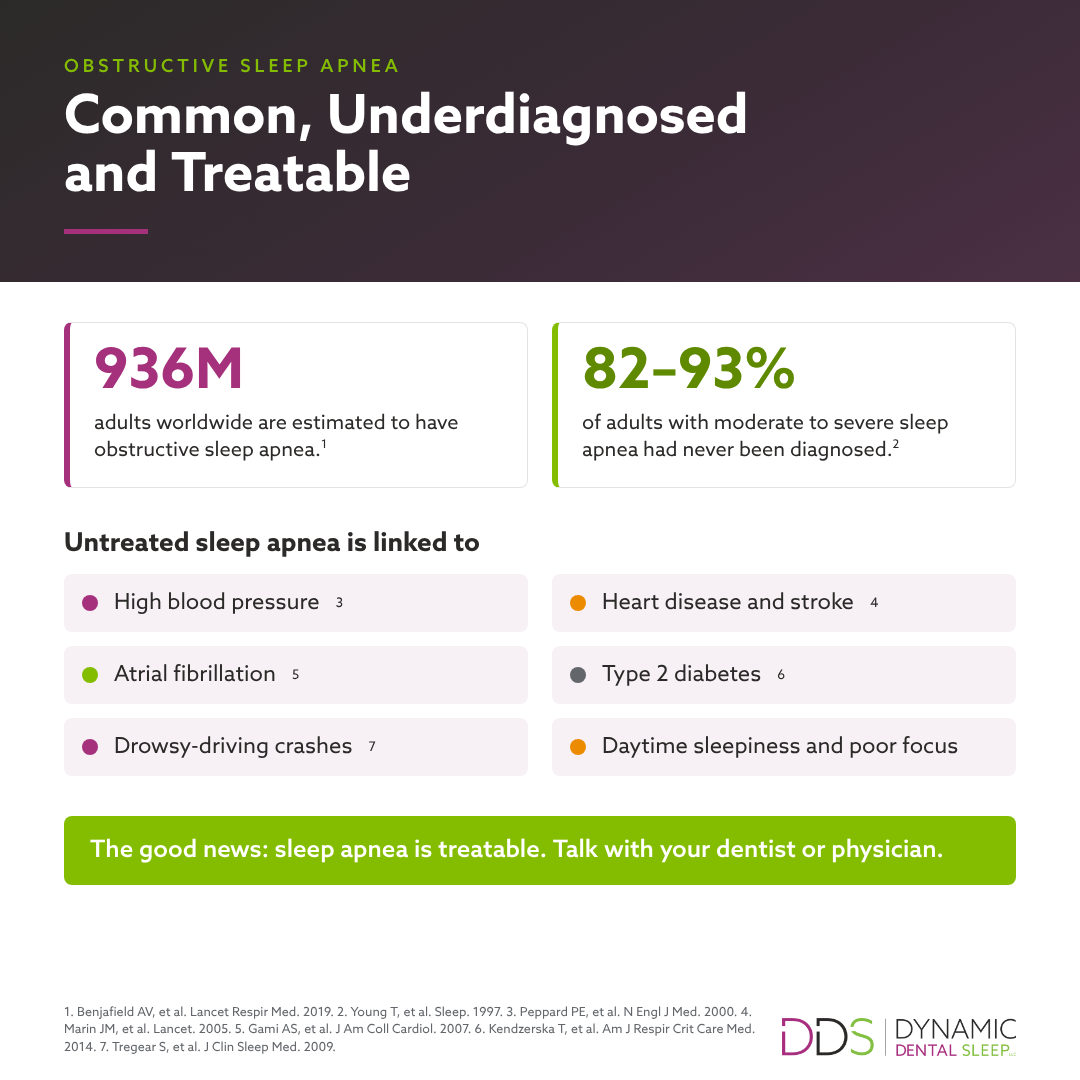
Obstructive sleep apnea (OSA) happens when the airway repeatedly narrows or closes during sleep, interrupting breathing and sleep. It’s common: an estimated 936 million adults worldwide have it,1 and in a large U.S. study, about 13% of men and 6% of women ages 30 to 70 had moderate to severe sleep-disordered breathing.2 Most people with sleep apnea have never been diagnosed.3
Common Signs of Sleep Apnea
- Loud snoring
- Gasping or choking during sleep
- Pauses in breathing that someone else notices
- Waking up tired or with a headache
- Daytime sleepiness
- Trouble concentrating
- Waking often to use the bathroom
Not sure? Take the Sleep Apnea Quiz at the top of this page.
Why It Matters
Untreated OSA is linked to high blood pressure,4 heart disease and stroke,5 atrial fibrillation,6 type 2 diabetes,7 drowsy-driving crashes,8 and, in severe untreated cases, a higher risk of death over time.9,10
The good news: sleep apnea is treatable. Options may include CPAP, oral appliance therapy, lifestyle changes or surgery, depending on your diagnosis. Getting evaluated is the first step.
References
- Benjafield AV, Ayas NT, Eastwood PR, et al. Estimation of the global prevalence and burden of obstructive sleep apnoea: a literature-based analysis. Lancet Respir Med. 2019;7(8):687-698.
- Peppard PE, Young T, Barnet JH, Palta M, Hagen EW, Hla KM. Increased prevalence of sleep-disordered breathing in adults. Am J Epidemiol. 2013;177(9):1006-1014.
- Young T, Evans L, Finn L, Palta M. Estimation of the clinically diagnosed proportion of sleep apnea syndrome in middle-aged men and women. Sleep. 1997;20(9):705-706.
- Peppard PE, Young T, Palta M, Skatrud J. Prospective study of the association between sleep-disordered breathing and hypertension. N Engl J Med. 2000;342(19):1378-1384.
- Marin JM, Carrizo SJ, Vicente E, Agusti AG. Long-term cardiovascular outcomes in men with obstructive sleep apnoea-hypopnoea with or without treatment with CPAP: an observational study. Lancet. 2005;365(9464):1046-1053.
- Gami AS, Hodge DO, Herges RM, et al. Obstructive sleep apnea, obesity, and the risk of incident atrial fibrillation. J Am Coll Cardiol. 2007;49(5):565-571.
- Kendzerska T, Gershon AS, Hawker G, Leung RS, Tomlinson G. Obstructive sleep apnea and incident diabetes: a historical cohort study. Am J Respir Crit Care Med. 2014;190(2):218-225.
- Tregear S, Reston J, Schoelles K, Phillips B. Obstructive sleep apnea and risk of motor vehicle crash: systematic review and meta-analysis. J Clin Sleep Med. 2009;5(6):573-581.
- Young T, Finn L, Peppard PE, et al. Sleep disordered breathing and mortality: eighteen-year follow-up of the Wisconsin sleep cohort. Sleep. 2008;31(8):1071-1078.
- Marshall NS, Wong KK, Cullen SR, Knuiman MW, Grunstein RR. Sleep apnea and 20-year follow-up for all-cause mortality, stroke, and cancer incidence and mortality in the Busselton Health Study cohort. J Clin Sleep Med. 2014;10(4):355-362.
Your Dentist’s Role in Better Sleep
Your dentist may be the first to notice signs of sleep apnea. During a routine exam, dentists can spot clues such as tooth wear, a scalloped tongue or a narrow airway, and ask about snoring and sleepiness.
Screen and Refer
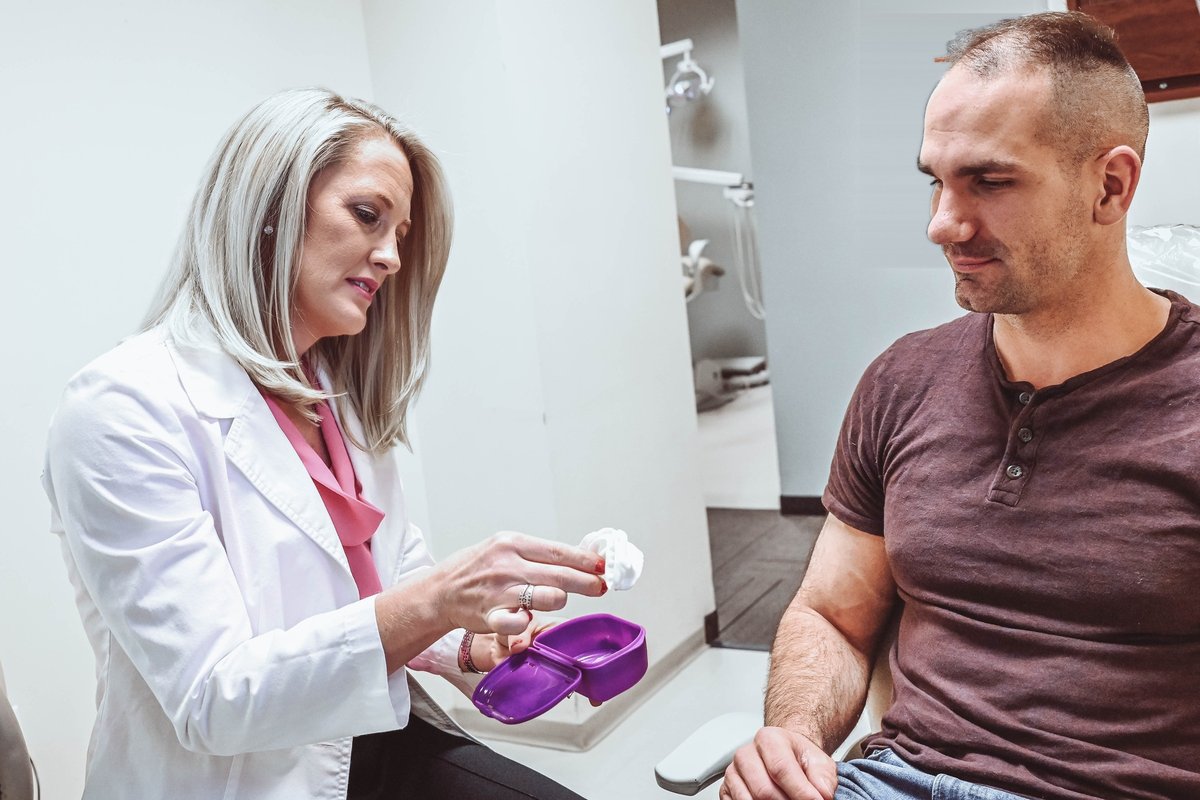
Dentists trained in dental sleep medicine screen for sleep apnea and refer you to a sleep physician, who evaluates you and makes the diagnosis.
Treat
If you’re diagnosed and oral appliance therapy is right for you, your dentist makes a custom oral appliance that gently holds your jaw forward to keep your airway open.
Follow Up Together
Your dentist and physician work together, with follow-up testing to make sure your treatment is working.
Use our Find A Dentist directory to find a DDS-trained dentist near you.
Dynamic Dental Sleep, LLC serves as a training entity, providing educational resources and courses. It is important to note that the responsibility for direct patient care lies with the patient’s healthcare provider, who is obligated to operate within their scope of practice and license requirements. Any inquiries or concerns regarding individual patient care should be directed to the patient’s dentist or other qualified medical professionals.
Is Oral Appliance Therapy Right for You?
If you’ve been diagnosed with sleep apnea, CPAP isn’t your only option. A custom oral appliance, made by a dentist trained in dental sleep medicine, is a proven treatment that many people find easier to live with.
Comfortable and Quiet
It looks like a sports mouthguard or retainer and is worn only while you sleep. No mask, no hose and no machine noise.
Easy to Travel With
It fits in a small case, needs no electricity and goes wherever you go.
Easier to Stick With
In a 2025 study, people wore their oral appliance about 6 hours a night, compared with about 5.3 hours for CPAP.1 The treatment you’ll actually use is the one that works.
Proven and Recommended
Sleep physicians and dentists jointly recommend oral appliance therapy for adults with sleep apnea who can’t tolerate CPAP or prefer an alternative.2
Made Just for You
Your dentist custom-fits your appliance and fine-tunes it over time for comfort and the best results.
Checked by Your Care Team
A follow-up sleep test confirms it’s working, and your dentist and physician stay in touch about your care.
Find a DDS-trained dentist near you →
1. Hamoda MM, Huynh N, Ayas NT, et al. Continuous positive airway pressure and mandibular advancement splints: the CHOICE multicentre, open-label randomised clinical trial. Eur Respir J. 2025;65(4):2401100. 2. Ramar K, Dort LC, Katz SG, et al. Clinical practice guideline for the treatment of obstructive sleep apnea and snoring with oral appliance therapy: an update for 2015. J Clin Sleep Med. 2015;11(7):773-827.
The Importance of Sleep
Sleep is not just a luxury; it’s a fundamental pillar of good health. Yet, in today’s fast-paced world, it’s often overlooked or sacrificed in favor of other priorities. However, the consequences of sleep deprivation and fragmented sleep can be profound, affecting every aspect of your life. As adults, it’s recommended that we aim for 7-9 hours of quality sleep per night. However, it’s not just about the quantity of sleep; the quality of your sleep matters as much as how long you sleep.

Quality
Healthy sleep cycles through light, deep and REM (dream) sleep. Each stage helps restore your body and mind.
Duration
Adults need 7 to 9 hours a night. Interruptions and restless sleep can rob you of rest even when you spend enough time in bed.
What Poor Sleep Can Affect
Hormones
Sleep helps regulate the hormones that control appetite, metabolism and stress. Ongoing short sleep throws them off balance.1
Weight
Too little sleep increases cravings for high-calorie foods and is linked to weight gain.2
Mood
Poor sleep is closely linked to anxiety and depression and makes stress harder to handle.3
Focus and Work
Sleep supports memory, focus and decision-making. Sleep loss lowers productivity and raises the risk of mistakes and accidents.4
Relationships
Poor sleep can bring irritability and conflict, and snoring or restless sleep can disrupt a partner’s sleep, too.5
Athletic Performance
Your body recovers while you sleep. Too little sleep slows reaction time and affects strength and coordination.6
The good news: healthy habits help. Keep a consistent sleep schedule, make your bedroom comfortable, dark and quiet, and give yourself time to wind down before bed. If sleep problems continue, talk with your dentist or physician.
References
- Taheri S, Lin L, Austin D, Young T, Mignot E. Short sleep duration is associated with reduced leptin, elevated ghrelin, and increased body mass index. PLoS Med. 2004;1(3):e62.
- Markwald RR, Melanson EL, Smith MR, et al. Impact of insufficient sleep on total daily energy expenditure, food intake, and weight gain. Proc Natl Acad Sci U S A. 2013;110(14):5695-5700.
- Baglioni C, Battagliese G, Feige B, et al. Insomnia as a predictor of depression: a meta-analytic evaluation of longitudinal epidemiological studies. J Affect Disord. 2011;135(1-3):10-19.
- Pilcher JJ, Huffcutt AI. Effects of sleep deprivation on performance: a meta-analysis. Sleep. 1996;19(4):318-326.
- Troxel WM, Robles TF, Hall M, Buysse DJ. Marital quality and the marital bed: examining the covariation between relationship quality and sleep. Sleep Med Rev. 2007;11(5):389-404.
- Halson SL. Sleep in elite athletes and nutritional interventions to enhance sleep. Sports Med. 2014;44 Suppl 1(Suppl 1):S13-S23.
SLEEP Better. FEEL Better. LIVE Better.
Want practical, science-backed tips for better sleep? Sleep.Thrive.Live., our free public education platform, brings credible sleep science into everyday life.
 Subscribe on YouTube
 Follow @SleepThriveLive
Patient Testimonials
Discover real-life experiences of individuals who have benefited from oral appliance therapy. Read inspiring stories and personal journeys to better sleep and improved quality of life.


Patient Resources
Stay updated with the latest news and advancements in sleep medicine and oral appliance therapy. Explore articles, videos, podcasts and breakthroughs shaping the field, plus free, credible sleep education from Sleep.Thrive.Live.

For Patients
Find A Sleep Medicine Dentist Near You
Snoring, waking up tired or told you stop breathing in your sleep? You’re not alone, and help may be closer than you think. Dentists in our Find A Dentist directory have trained with Dynamic Dental Sleep to screen for sleep-disordered breathing, work with sleep physicians who evaluate and diagnose, and provide oral appliance therapy when it’s right for you, with follow-up to make sure it’s working. They partner with your medical team so your care stays connected.
Want to learn more first? Sleep.Thrive.Live., our free public education platform, brings credible sleep science into everyday life.